Heating is no longer just a background system homeowners think about once a year. Today, every heating company faces a rapidly changing landscape shaped by electrification, smarter homes, rising energy costs, and evolving regulations. The future of heating isn’t about replacing old equipment with newer models, it’s about rethinking how homes produce, manage, and optimize heat altogether.
Why Innovative Heating Is Becoming Essential
Because the old model doesn’t work anymore.
Energy prices are volatile. Regulations are tightening. Homeowners expect lower bills, better comfort, and smart home integration. Electrification and decarbonization goals are pushing the industry away from traditional combustion-based systems. We’re entering an era of grid strain during extreme weather, electrification mandates, rapid fuel cost volatility, aging housing stock, and climate-driven temperature swings.
Innovative heating isn’t just a “nice upgrade.” It isn’t optional because the risk landscape has changed. Heating is no longer just about comfort, it’s about resilience.
Innovative heating is a response to rising utility costs, stricter efficiency standards, carbon reduction mandates, demand for smarter connected homes, and labor shortages that require more intelligent systems. The HVAC industry is shifting from simply producing heat to delivering controlled, data-driven indoor comfort. Contractors who don’t adapt to innovative heating strategies risk falling behind technically and competitively.
Modern systems are being designed not just to heat homes efficiently, but to maintain performance during extreme cold snaps, reduce dependency on a single fuel source, integrate with distributed energy systems, and adapt to peak demand pricing.
In other words, innovative heating is about protecting homeowners from instability, economic and environmental.
What Next Gen Heating Really Means
Next gen heating means your system doesn’t just turn on and off. It thinks, adjusts, and optimizes. It’s not about “more heat.” It’s about smarter heat delivery.
Next gen heating means the heating system becomes part of the home’s infrastructure strategy, not just a mechanical appliance. Instead of “Here’s your furnace,” it becomes “This is how your home manages energy, comfort, and long-term operating costs.” It shifts heating from a standalone system to a networked performance asset.
In practical terms, next gen heating includes variable-speed heat pumps that modulate output instead of cycling and systems that adjust based on outdoor conditions in real time. It connects with solar production curves, battery storage logic, real-time grid pricing, weather forecasting models, and home occupancy behavior. That means integration with solar panels and battery storage, zoning that responds to occupancy rather than guesswork, remote diagnostics with performance tracking, and airflow optimization supported by proper duct cleaning, all core components of next gen heating systems.
For modern homes, it results in fewer temperature swings, quieter operation, and systems that adapt to how the family actually lives, not how someone assumed they would.
Heating Innovations Shaping the Future of Comfort
Several key heating innovations are driving the shift.
Cold-climate heat pumps now perform efficiently even in freezing temperatures, making full electrification viable in regions that once depended on gas. Variable-speed compressors and ECM motors ramp up and down smoothly instead of running full blast or shutting off, improving comfort and reducing wear. Hydronic advancements, including high-efficiency boilers paired with smart mixing valves and low-temperature radiant systems, are redefining comfort in luxury builds. Thermal energy storage systems that store heat during off-peak hours and release it when needed are changing how we think about energy timing. Integrated indoor air quality systems mean heating is no longer separate from air purification, humidity control, and ventilation, it’s part of a whole-home performance strategy shaped by ongoing heating innovations.
The future isn’t one breakthrough. It’s a layered system of intelligent components working together. The real innovation isn’t a single product. It’s system coordination, where heating innovations function as an integrated ecosystem.
Heating systems now focus on load matching instead of brute force output, delivering only what the house actually needs in that moment, not what it might need at peak. Dual-fuel and hybrid systems automatically switch energy sources based on efficiency thresholds and pricing. Homeowners can now see system runtime, efficiency trends, and operating cost patterns thanks to modern heating innovations.
Transparency changes behavior, and that’s powerful. Comfort becomes measurable instead of assumed.
How Smart Heating Is Transforming Home Control
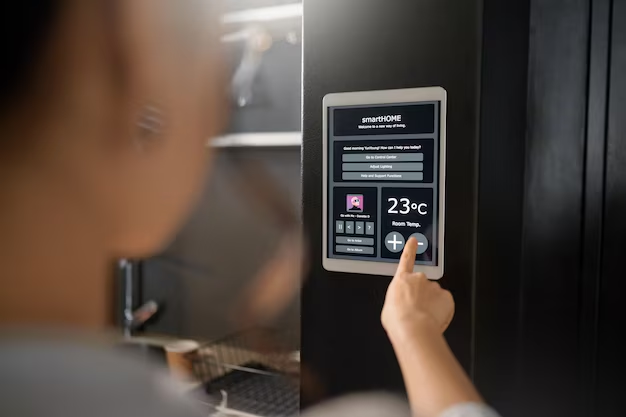
Smart heating moves control from reactive to predictive. The system becomes proactive instead of reactive. That shift from reaction to prediction is what truly defines smart heating.
Traditional thermostats respond after the temperature drops. Old systems forced homeowners to manage comfort manually and constantly adjust the thermostat. Smart heating removes constant decision-making and reduces “thermostat anxiety.”
Smart systems analyze patterns, weather forecasts, and occupancy data to adjust proactively. Through smart heating platforms, systems use geofencing that lowers output when the home is empty, learning algorithms that understand daily routines, and utility integration that shifts usage during peak pricing. They can preheat based on weather patterns, adjust based on how quickly your home loses heat, self-correct inefficiencies, and notify before performance drops or a breakdown occurs, all core functions of smart heating technology.
Automation reduces human error. The result isn’t just convenience, it’s measurable efficiency gains delivered through smart heating.
Advanced Technology Heating and Energy Performance
The biggest shift is electrification paired with efficiency, a defining characteristic of advanced technology heating.
Heat pumps move heat rather than generate it through combustion. That alone can deliver 2-4 times more energy than they consume in electricity under the right conditions. Advanced heating systems use inverter-driven compressors to reduce energy waste, optimize run cycles to minimize peak demand, integrate with renewable energy sources, and reduce greenhouse gas emissions compared to fossil fuel systems, all hallmarks of advanced technology heating.
Sustainability is no longer about “less bad.” It’s about fundamentally better performance per unit of energy consumed. As grids become cleaner, electric systems powered by advanced technology heating become even more environmentally responsible over time.
Sustainability is now tied to grid intelligence. Modern heating systems can reduce draw during peak grid stress, run when renewable production is high, integrate with demand-response programs, and participate in utility incentive programs, expanding the role of advanced technology heating beyond the home itself.
Homes are slowly becoming distributed energy participants. Heating systems are part of grid stabilization.
How AI Is Powering New Heating Technology
AI is moving HVAC from programmed behavior to adaptive intelligence. We’re entering an era where heating systems don’t just operate, they learn. AI is transforming HVAC from maintenance-based to probability-based, accelerating the development of new heating technology.
Instead of relying on fixed schedules, AI-driven systems analyze usage trends and adjust automatically, detect performance anomalies before failure, predict maintenance needs, optimize energy consumption based on historical data, and coordinate with other smart home systems. AI models analyze compressor cycling patterns, outdoor temperature response curves, runtime deviations, and historical seasonal behavior, capabilities made possible by new heating technology.
Instead of “Call us when it breaks,” it becomes “Your system shows a 72% probability of reduced efficiency within 45 days.”
For contractors, AI-enabled diagnostics reduce guesswork. For homeowners, new heating technology means fewer surprises and lower lifetime operating costs.
The biggest impact? Reduced emergency failures, and fewer urgent calls for 24 hour heating repair in the middle of extreme weather.
Innovative Heating and the Future of HVAC Installation
Installation is becoming more technical and more performance-focused as innovative heating systems grow more complex.
Proper load calculations are more critical than ever. Oversizing a high-efficiency heat pump can reduce performance dramatically. Duct design, airflow balancing, refrigerant charging precision, and system commissioning data matter more with variable-speed systems. Commissioning and verification are becoming just as important as equipment selection in innovative heating projects.
The industry is moving from equipment replacement to system design. Installation is shifting from equipment replacement to performance engineering. The “install and walk away” model is disappearing, especially with new heating technology and advanced technology heating systems requiring precise configuration.
Technicians now need electrical knowledge, digital literacy, and system optimization skills, not just mechanical expertise. Contractors must understand building envelope interaction, static pressure mapping, electrical load capacity, and software configuration to properly implement next gen heating systems.
Service is shifting toward software updates and firmware diagnostics, data-driven troubleshooting, electrical upgrades for electrification, and integration with smart home platforms.
This raises the professional bar, and differentiates skilled contractors from box-swappers.
Preparing for the Next Gen Heating Era
Preparation starts before equipment replacement, especially with next gen heating and smart heating systems.
Homeowners should improve insulation and air sealing because efficient heating works best in efficient homes. They should upgrade electrical capacity if needed, since electrification often requires panel evaluation and reviewing panel capacity before installing advanced technology heating systems. Zoning and duct performance also matter, as airflow quality affects system performance more than most realize, which makes evaluating duct leakage important before adopting innovative heating solutions.
It’s also smart to learn about available incentives and track utility rate structures, as many regions offer rebates for high-efficiency or electric systems. Choosing contractors who perform detailed load calculations is critical, because even the best new heating technology fails when improperly sized. Preparation means understanding current energy usage patterns and considering hybrid options during fuel transition.
Next gen heating isn’t just about buying a new unit. It’s about preparing the home to fully benefit from smarter, more efficient systems. Homeowners should think in terms of a home performance strategy, not just equipment upgrades. The biggest mistake is replacing equipment without evaluating the system around it.
Next gen heating rewards preparation.